


Decolonising Development Studies: Why It Matters

By Devika Dutt

Calls to decolonise Development Studies have gained increasing visibility across universities, research institutes, and policy spaces. Yet despite its growing popularity, decolonisation is often treated as a loosely defined aspiration rather than a substantive intellectual and political project. In many cases, it is reduced to efforts to diversify reading lists or improve representation within existing frameworks. While such initiatives are important in their own right, they do not address the deeper structural and epistemic foundations of the field.

Continue reading “Decolonising Development Studies: Why It Matters”

The Challenges of Decolonising Sustainability and the Environment in Development Studies

By Lyla Mehta

The colonial roots of sustainability 

Since the Brundtland Commission advanced the concept of sustainable development in 1987, a lively strand in Development Studies (DS) has engaged with the linkages between environment, sustainability and development. This remained fairly niche until the 2030 Agenda and its 17 Sustainable Development Goals (SDGs) goals mainstreamed sustainable development.

Continue reading “The Challenges of Decolonising Sustainability and the Environment in Development Studies”

Global AND International Development against all Inequalities

By Alessandra Mezzadri

Development: Contested Categories

Since its inception after World War II, Development Studies has been deeply intertwined with the socio-economic transformation of formerly colonized countries. Initially, the discipline was tasked with addressing the question of how these newly independent nations could be integrated into the world system. This integration was closely linked to the process of modernization, a goal shared by many of these nascent governments. However, the object and subjects of development have always been contested.

Continue reading “Global AND International Development against all Inequalities”

Social protection and social cohesion are key for climate action

By Daniele Malerba

The current energy crisis stemming from the war in Ukraine has shown that long-term climate mitigation needs to be coupled with the reduction of poverty and inequality; it is obvious that climate change is a global problem, and one that needs to be addressed in combination with social justice. In a recent article in an EJDR  special issue, we make the case that the relationship and effects of social protection and social cohesion are critical in this sense.  Social cohesion is defined as “the vertical and the horizontal relations among members of society and the state as characterized by a set of attitudes and norms that includes trust, an inclusive identity, and cooperation for the common good”

Continue reading “Social protection and social cohesion are key for climate action”
Who to blame? The rough start for living income cocoa prices in Côte d’Ivoire and Ghana

By Felix Maile, Bernhard Tröster, Cornelia Staritz and Jan Grumiller

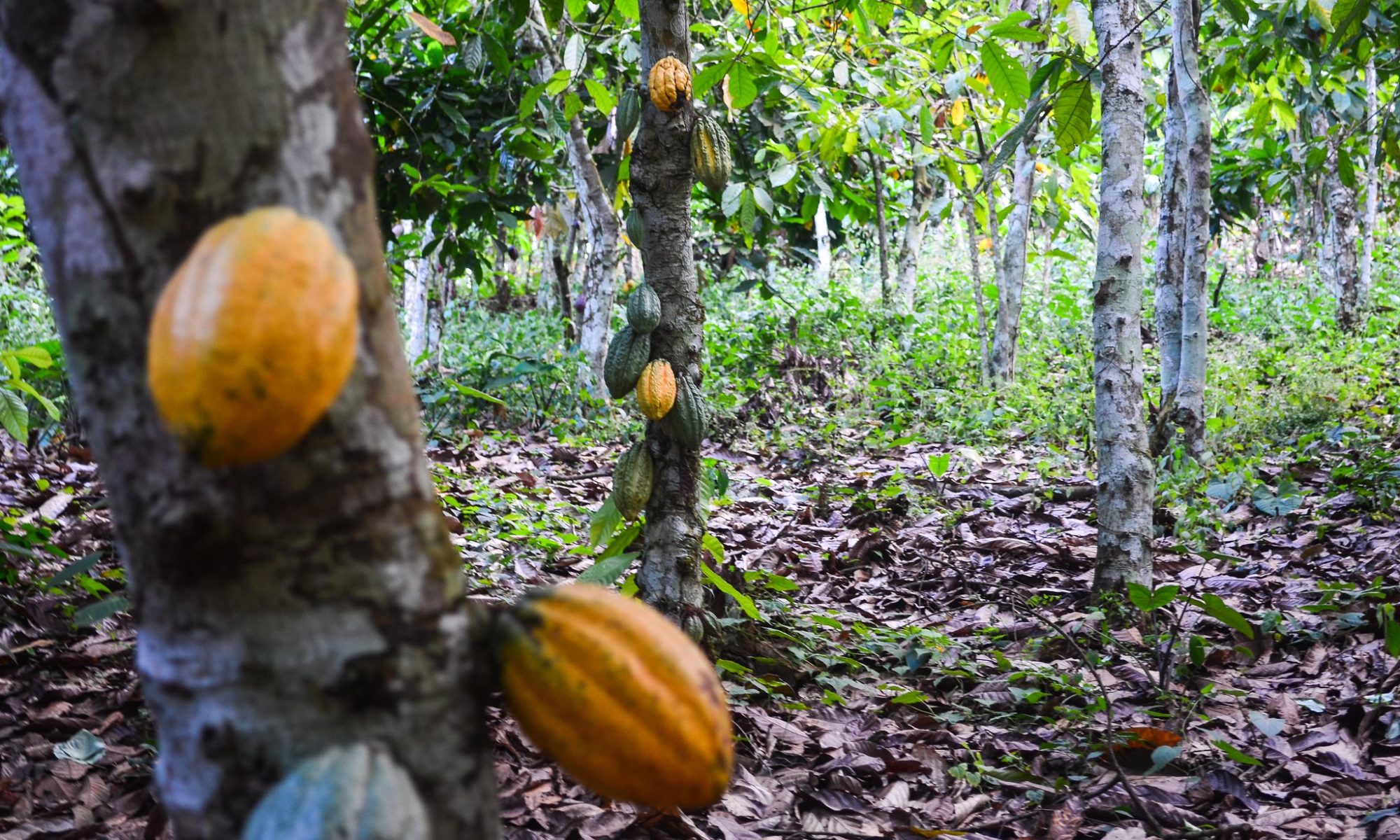
Commodity price instability is a major challenge for commodity-dependent countries. This is also true for the major cocoa producer countries Côte d’Ivoire and Ghana, which account for two thirds of world’s cocoa production. As we argue in a recent article in the EJDR , the two West African countries can challenge the price-setting power of highly concentrated international buyers through their state-governed price-stabilization measures. However, export and producer price stabilization is limited to one season and entails great risks for the state due to intra-seasonal price volatility. Moreover, inter-seasonal price instability is not addressed and largely born by smallholder farmers, and export and producer prices remain linked to world prices set on futures markets in London and New York.

Continue reading “Who to blame? The rough start for living income cocoa prices in Côte d’Ivoire and Ghana”