

How Social Science Fiction Could Transform Development Research: Extending our Methodological Horizons

By Laura Camfield

In an era of increasing complexity and uncertainty, conventional methodological approaches to pressing development concerns such as extreme income inequality often fall short. In a new reflection paper, Andy Sumner and I propose a new approach, social science fiction (SSF), not merely as an opportunity to cultivate empathy, but also as a robust methodological tool for development research.

Continue reading “How Social Science Fiction Could Transform Development Research: Extending our Methodological Horizons”

The Gradual Change of Multilateralism and Development Cooperation

By Lars Engberg-Pedersen

In a recent piece on this blog, Stephan Klingebiel and Andy Sumner take up the important question of how the present situation of international cooperation and global development should be described. Clearly, they should be thanked for addressing the question, which has become increasingly urgent the last year. In this piece, I will discuss some of their arguments as an input into the discussion of contemporary changes.

Continue reading “The Gradual Change of Multilateralism and Development Cooperation”

Transforming the International Development Cooperation System – Mission Impossible?

Interview with Aram Ziai, Chair of Development and Postcolonial Studies, University of Kassel, Germany.

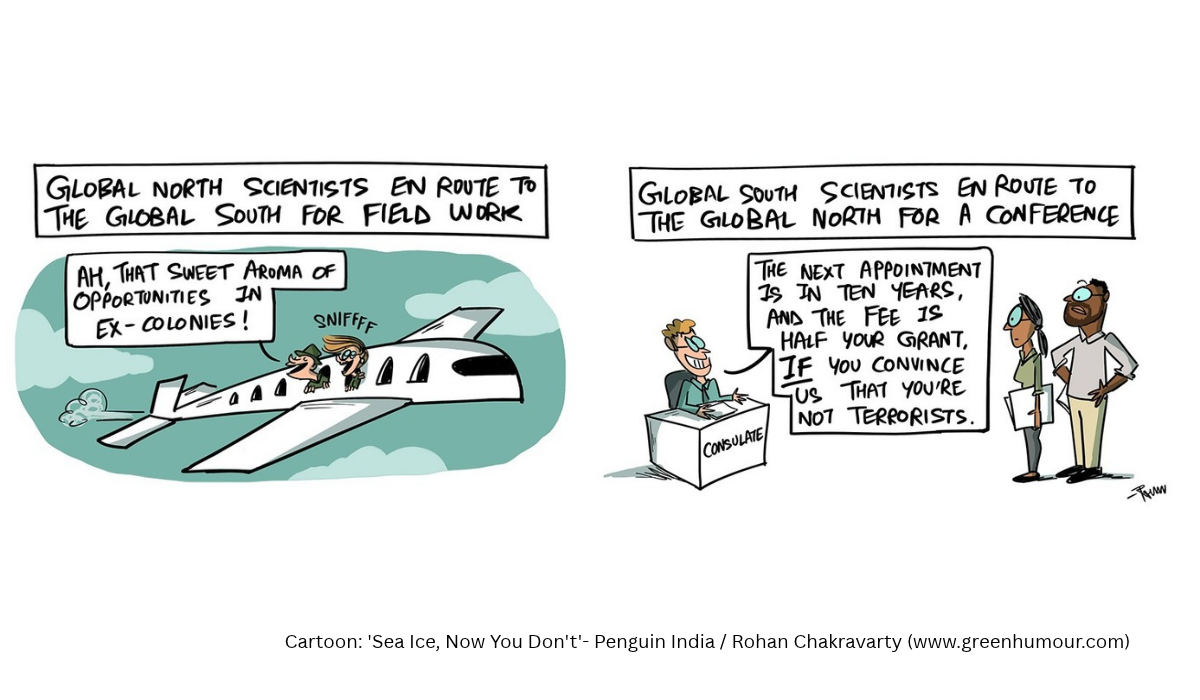
Professor Aram Ziai is an academic who has been writing on Post-Development for over 20 years. His work is all centred around decolonising the sector – and on how colonial injustices are still effective in our day-to-day life. He is also Executive Director of the Global Partnership Network, which has been explicitly set up to try to decolonise international cooperation and knowledge production as far as the structures of the ‘development industry’ will allow.

Continue reading “Transforming the International Development Cooperation System – Mission Impossible?”

Legitimacy at the Core: Transformative Green Industrial Policy for a Just Mineral Extraction

By Anabel Marin and Santiago Cunial

The global race for minerals is accelerating. Minerals like lithium, copper, and nickel are increasingly treated as the “new oil” of the energy transition and other global agendas. From critical mineral alliances to supply chain pacts, consumer countries are seeking “secure and sustainable” flows of these resources.

But in mining territories, “sustainable” is too often an empty promise. Recent evidence strongly suggests that without legitimacy, even the most technically advanced projects face roadblocks, reversals, or outright cancellation. Yet legitimacy cannot be built through communication campaigns, tokenistic participation, or compensation alone; it requires transforming how decisions are made and how projects are designed from the ground up.

Continue reading “Legitimacy at the Core: Transformative Green Industrial Policy for a Just Mineral Extraction”

Development Cooperation at a Tipping Point: How do Policy Norms Break?

By Stephan Klingebiel and Andy Sumner

The global system of development cooperation is entering uncertain territory. For decades, multilateralism and global solidarity shaped the expectations of how global development policy should be organised and justified. These norms provided a degree of stability, even if practice often fell short. In a new Discussion Paper we argue that those assumptions can no longer be taken for granted.

Continue reading “Development Cooperation at a Tipping Point: How do Policy Norms Break?”