
By Abdullah Qayomi
Between 2001 and 2021, Afghanistan received more international development assistance than almost any country in modern history. Nevertheless, the Afghan state fell apart within days creating social chaos and causing the country to hit rock-bottom socially, economically and politically like never before in its history. The explanation for such a level of societal fragility, after billions of U.S. Dollar investment, is disturbing and simply beyond corruption or poor implementation. This is not to deny the importance of corruption, insecurity, political fragmentation, regional interference, or insurgency. Rather, these factors became so devastating because the development approach itself failed to build institutions that were socially legitimate and locally rooted.
Here, the argument is that the dominant framework of development, often referred to as the mainstream development model, embodies primarily three interrelated assumptions that were particularly problematic in Afghanistan. First, the model gives economic growth a centripetal role in development linking all efforts to economic expansion and viewing human well-being or flourishing the outcome of economic growth. Second, it places the development approach adopted by the west as the blueprint or paradigm for all development practices elsewhere. Third, it assumes modernisation as universal and considers it is appropriate to design and plan programmes, projects and institutions elsewhere and export or transplant them into target societies without local knowledge or participation.
The consequences of these assumptions were unforeseen and indeed led to societal paralysis in Afghanistan. Each of the three assumptions shaped post-2001 reconstruction efforts in distinct ways.
Development and the Disaster of Measuring It Through Economic Growth
Much mainstream development practice has prioritized industrialization, market expansion, liberalization, democratization, and economic growth, with success frequently assessed through macroeconomic indicators such as GDP. Hence, billions of dollars were poured into Afghanistan under international development aid to primarily build and strengthen economic pillars of the country. All newly developed national plans and strategies were largely aimed at economic development. Markets were liberalized and open to foreign investments and products, which led to decapitation of indigenous industries, further cementing the country’s position as an import-dependent market and widening its trade deficit unprecedently.
Rapid trade liberalization and privatization were introduced while the Afghan state lacked the regulatory capacity needed to manage them effectively. Similarly, Afghanistan joined international trade institutions such as the WTO while domestic institutions remained too weak to fully negotiate or implement the obligations involved. The education system was focused on labor production, and higher education strategies were aimed at contributing to country’s overall economic development. Although it cannot be denied that economic expansion efforts in Afghanistan might have solved some issues, it was outside the scope of economic expansion to provide solutions to societal fragility and several other problems.
The Hubris of Treating Western Development as a Universal Blueprint
Arguably, there is no single approach that all societies can follow as a blueprint or paradigm to reach a development goal even if the goals are the same or similar across societies. Thus, economic growth or expansion achieved through mainstream development approach in most countries especially in the west does not necessarily mean human flourishing and that the model can be a perfect blueprint for all other societies. Development should be a context-sensitive and locally driven process. It should be accounted for that social organisations, values and needs vary across societies and their development goals may be different. For instance, development goals and priorities in traditional and heavily fundamentalist societies like Afghanistan are genuinely distinct and unique from those in the west.
Afghanistan as a highly traditional society still prioritizes collectivism, hierarchy and religious or spiritual social frameworks unlike the Western world, which celebrates individual autonomy and self-expression. In Afghanistan, identity is deeply tied to the extended family, tribe or community, and decisions regarding marriage, career, living arrangements frequently prioritizes collective welfare over personal preferences. Respect for elders, religious leaders and historical institutions are paramount. Customs are viewed as proven frameworks for societal stability that should be preserved. Unlike many of the western countries that tend to rely on secular-rational, legalistic structures, the moral and legal systems in Afghanistan are based on religious or spiritual beliefs, giving sacred meaning to daily life. And most importantly, family networks remain central and traditional nuclear or extended family structure forms the social safety net, making filial piety, care for aging parents, and multigenerational households, fundamental priorities. Tribal affiliations matter the most and people still heavily rely on tribal support in most parts of the country.
These social structures in Afghanistan did not necessarily fit the assumptions embedded in the West’s liberal development paradigm based in which policies were designed that were often at odds with local realities.
Expert-led Development and Imported Solutions: The Marginalization of Local Knowledge and the Loss of Local Agency
Societies are different and have their own inherent history, culture, political organisation yielding state legitimacy, ecological and geographical contexts, and most importantly institutional capacity. Therefore, any expert-led development with local knowledge and participation marginalized, and imported solutions from other parts of the world that are insensitive to local contexts can prove counterproductive and leaves societies more unstable and less prosperous than before.
Afghanistan serves as a clear illustration of this phenomenon. Programmes and projects were either replicated or designed by foreign experts, governments, NGO’s and international institutions based on pre-determined assumptions or successes elsewhere and local knowledge and people’s agency was widely overlooked.
The local realities, which make Afghanistan at odds with the dominant assumptions of mainstream development are its turbulent history, power structures, political memories, orthodox religious beliefs, geographically diverse terrain, social relationships, and institutional capacity.
Afghanistan’s recent history includes imperial competitions of the Great Game era, failed attempts at centralization by different regimes, and decades of political turmoil and instability spanning the pre-Soviet invasion, civil wars, the Taliban’s first ruling period, and foreign intervention post 2001. The country’s social and political organization has historically been far more decentralized, locally governed, and mediated through tribal, religious, and regional networks. Less often throughout its history has the country been thoroughly or expansively governed by a strong centralized government. Local mechanisms and institutions i.e. religious authorities, local elders, tribal councils and jirgas have largely served as the de facto mode of government for addressing people’s societal needs with the central government mostly regulating and overseeing these mechanisms.
Conclusion:
Afghanistan did not prove that development is impossible. It showed that development cannot simply be exported or sustainable change cannot be engineered from outside. It must be rooted in the knowledge, institutions, and agency of the people it seeks to serve. Roads, schools and institutions matter, but only when they grow from within the societies they are meant to serve. Afghanistan’s experience reminds us that development is a political and social process that must emerge from within the society. Sustainable development depends not on importing institutions, but on enabling people to shape their own futures through institutions they recognize as legitimate and their own.
Abdullah Qayomi comes from an academic background in Afghanistan and has been involved in development programmes and projects, and in higher education for over ten years, with much of his work focused on Afghanistan. He writes on issues related to development and higher education.
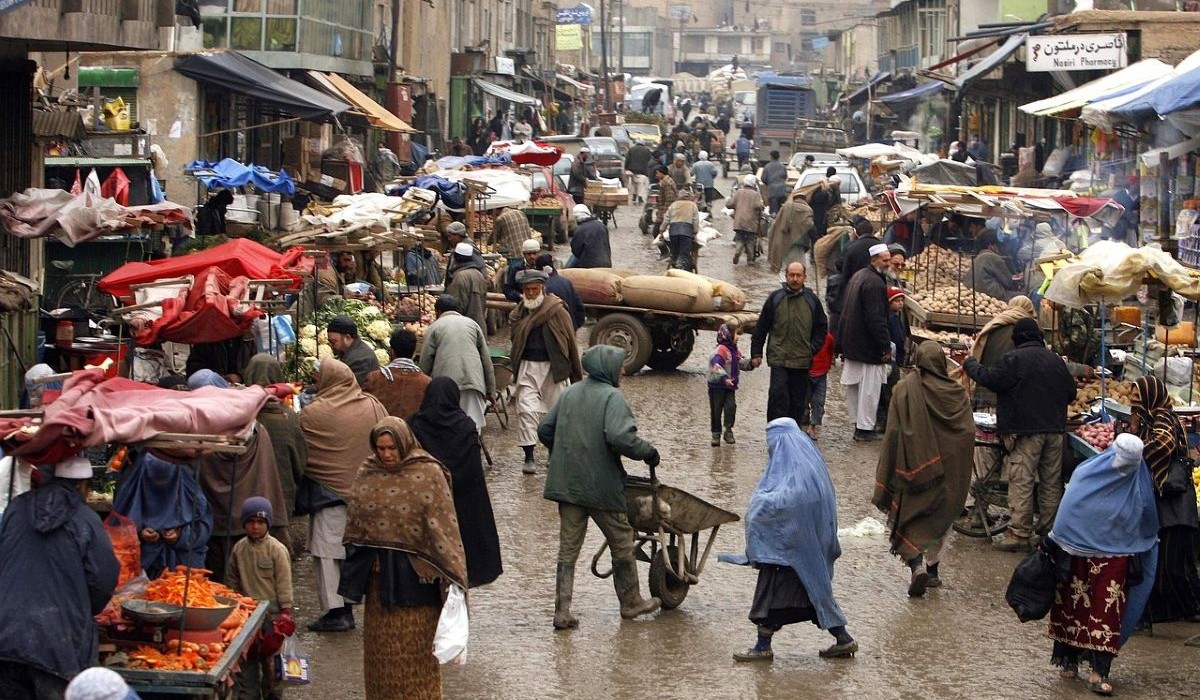
Image: unknown photographer on Pixabay
Note: This article gives the views of the author, not the position of the EADI Debating Development Blog or the European Association of Development Research and Training Institutes