

Rethinking work for sustainability and justice

By Erik Gomez-Baggethun

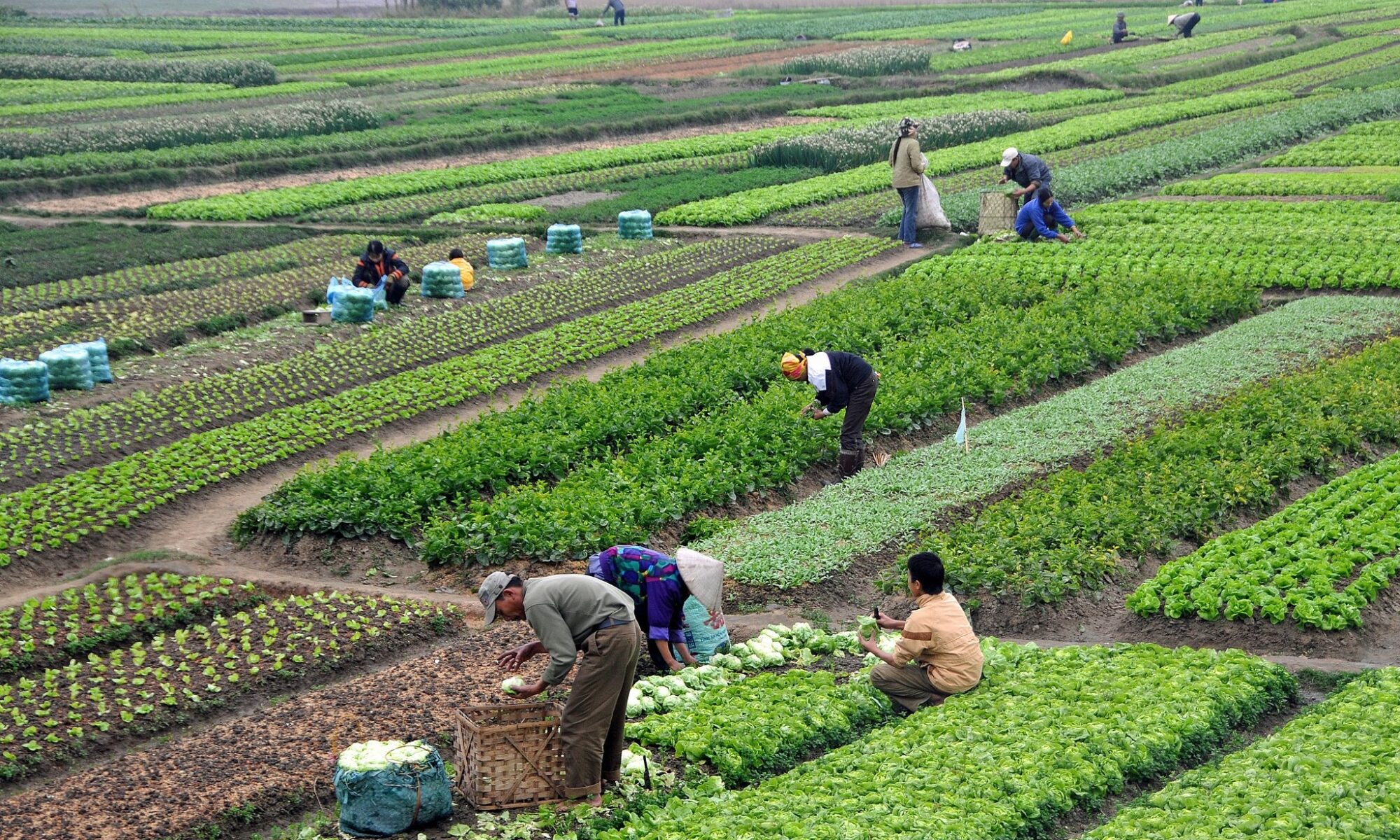
Work time reduction is one of the central policy proposals brought forward by ecological economists and degrowth scholars to reduce environmental pressure and unemployment and enhance human well-being. In its broader meaning, work is defined as an activity involving mental or physical effort done to achieve a purpose or result. In economic and policy debates, however, the dominant notion of ‘work’ has acquired a much narrower meaning. It does not extend to cover the activities required for the reproduction of life such as caring and housekeeping, neither the broader set of things we do on our own initiative without expecting remuneration. The dominant conception of work remains confined to the set of activities formally recognized by society as worthy of remuneration. For most people in Western capitalist countries, work is still understood as wage labour, and weekly working times of around 40 hours have come to be perceived as an almost natural configuration of time.

Continue reading “Rethinking work for sustainability and justice”

The global lab: political and technological experiments in the Global South

By Adam Moe Fejerskov

From pandemics to climate change to ever-growing humanitarian needs, humanity is making limited progress in tackling the structural causes of contemporary global crises. The result is a future of growing unknowns. Here, politics become increasingly experimental, as we struggle with unprecedented challenges and changes, leaving the fate of both planet and people to unproven technologies and uncertain policies. In a new book, The Global Lab, I explore the question of a future of experimental politics that too often becomes one of both inequality and exclusion for vulnerable groups across the world.

Continue reading “The global lab: political and technological experiments in the Global South”

Our bright digital lives: some critical thoughts

By Basile Boulay

We find ourselves at a strange crossroads. Never have we been more aware of the devastating impact of consumer goods on the environment and never have we been so dependent upon them. Technological innovations are embedded in the daily lives of even the most critical among us, and both usage of and demand for devices grows exponentially, leaving us to contemplate the ravages of climate change on our brightly lit screens. Understanding our relationship with modern technologies as well as conceptualising a coherent framework for a collective liveable future requires us to engage with difficult questions while avoiding counterproductive moralising pitfalls. In this blogpost, I suggest that a critical political economy outlook coupled with an effort to reconceptualise the ‘good life’ could be a useful starting point.

Continue reading “Our bright digital lives: some critical thoughts”

What do the global supply chain disruptions tell us about the world economy?

By Intan Suwandi

Lockdowns and shutdowns due to the COVID-19 pandemic led to what is being referred to as the “first global supply chain crisis.” The supply chain disruption has made havoc since the beginning of the pandemic, with more than 90 percent of the 1000 Fortune multinational corporations having a tier-one or tier-two supplier affected by the virus in February 2020.  By mid-April 2020, 81 percent of global manufacturing firms were experiencing supply shortages. Also in the same year, hundreds of US companies reported that their suppliers only operated at an average of 50 percent capacity, which resulted in longer final product lead times and a negative impact between 5.6 to 15 percent on their revenues. Although recent reports indicate that the situation has become less severe, many analysts still think that the “supply chain nightmare” is far from over, and it is predicted that supply chain disruptions will continue until late 2022.

Continue reading “What do the global supply chain disruptions tell us about the world economy?”

The ecological consequences of ‘economic development’: the expansion of gold mining in the Volta Grande do Xingu

By Amélie Foko’o Magoua, Anna Chevalier, Cassandra Ajufoh and Tomaso Ferrando

On June 5th, a group of inhabitants of the agrarian reform settlement Ressaca in the Brazilian state of Para organized a collective action to take back public land previously turned over to Belo Sun Ltd, a Canadian mining company. The action, conducted with the support of indigenous communities and actors from across the Amazon region, aimed at vindicating the right of people to the integrity of their territories and opposing the way in which regulators, politicians and private companies were sacrificing them in the name of gold extraction and global trade in natural resources. Moreover, the action was a clear signal against the limits of national legal processes and a consequence of a frustrating visit to public and private actors in the European Union.

Continue reading “The ecological consequences of ‘economic development’: the expansion of gold mining in the Volta Grande do Xingu”