
By Magnus Godvik Ekeland / Shaping Sustainable Futures conference series
Three decades since the end of apartheid, South Africa remains one of the world’s most unequal countries. For almost as long, NGOs, labour unions and scholars have promoted a Basic Income Grant (BIG) as a step towards remedying this. Yet, in the flurry of op-eds, blogs and scholarly articles weighing the pros and cons of a BIG, conspicuously few have discussed its impact on debt. This is a surprising omission, considering the significance of borrowing for the livelihood strategies of the country’s (working) poor.
The connection between loans and livelihoods was evident for example in the rural townships of the Sundays River Valley where I conducted 16 months of ethnographic fieldwork between 2018 and 2022. My work explored how underemployed residents reconciled the need to enter into socio-financial dependencies with an aversion to hierarchies. Aside from being experienced as embarrassing and undignified, my friends and interlocutors often bemoaned how requests for food and cash rapidly wore down valorised relationships. Borrowing had curiously sailed up as a way of offsetting this risk, thereby preserving both dignity and relationships. Yet, borrowing came with its own dangers, overborrowing and missed payments. Underemployed residents thus walked a tightrope between squandering relations with family by depending too heavily on them, and ruining friendships by overborrowing. Although my interlocutors and friends managed this surprisingly well, they all agreed that this practice was far from sustainable.
It is against this backdrop that I have been speculating on whether a future BIG might offer my South African friends and interlocutors a balancing pole, helping them avoid falling into the “Scylla” of dependencies on family and close friends or the Charybdis of overborrowing and indebtedness.
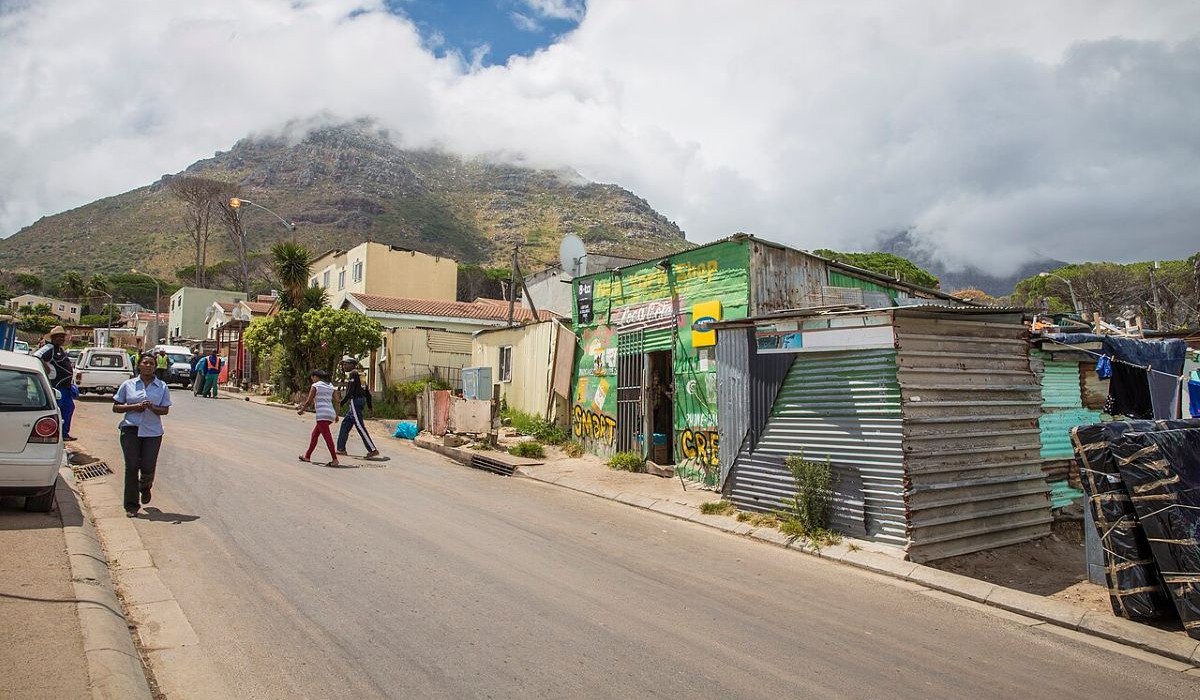
Neglected Towns
The only thing my interlocutors unanimously agreed on was that they were living in a part of the country that was neglected by both the government and the market. It was difficult to disagree with them when the evidence was all around: from underfunded schools and unreliable access to water to the absence of shops beyond the locally owned all-purpose grocery stores, and, most critically, the limited number of opportunities for formal and informal labour. Keeping afloat invariably entailed maintaining socio-financial dependencies on family members, neighbours, businessowners or the state.
The reality of dependence did, however, square poorly with the prevalent ideas of personhood, which foregrounded a strong commitment to sameness (downplaying differences in social interactions) and financial autonomy. Dependencies were often rhetorically linked to begging, and begging to certain moral vices, including substance abuse, laziness and sheer incompetence.
Never passively accepting dependencies, residents had developed a remarkably creative set of strategies for contesting, reconfiguring, and negotiating hierarchies independencies. I have labelled one of these strategies as formalisation, which is observable in the preference for requesting loans.
Loans
The vast majority of loans were informal, as there were few formal lenders operating locally. While informal institutionalised lenders, so-called loansharks or skoppers, as they were known locally, typically comes to mind, most loans were in fact negotiated between family members, friends and neighbours. There was an unspoken rule that employed residents should accommodate a small number of loan requests, lest they risked social ostracization. With job-security generally being low, the roles of creditor and debtor were frequently changing.
While all interlocutors framed borrowing as a last resort, they nonetheless agreed on how debt itself was not inherently negative: being granted a loan was a testament to a respectable reputation, and thus a marker of dignity. The notion that debt preserves dignity might sound counterintuitive, yet to grant a loan is to recognise the other party as trustworthy and capable of returning the loan. This has a particularly strong resonance in South Africa, where the majority historically were excluded from the financial economy. Although debt remained a cause of stress and anxiety for the borrower, it did not damage their reputation unless they failed to return the loan. It was debt’s transition into indebtedness that heralded a shift from equality to hierarchy, and thus to humiliation on the part of the borrower.
Among friends and family members, loans became a way of exorcising what I call the “Spectre of Dependence”, by formalising transactions and binding them to the calendar. By asking for a loan, people were not “eating“ the other party’s wealth, since the cash was expected to be returned. In theory, in cases where the agreed amount was repaid, the relationship was left intact. Added interest typically followed closeness in mutual fondness, and between close friends and family members it was not unusual for the creditor to “forget” about the loan. This was however sadly the exception rather than the rule, and the reality was far less rosy.
Due to limited opportunities for formal and informal labour, debtors frequently missed interest payments and generally struggled to return loans on the agreed-upon dates. Whereas creditors were often sympathetic to their indebted friends, the respective spouses were not. Given the meagre salaries, accommodating loans often came at the expense of household savings. Borrowing was therefore a frequent cause of conflicts between spouses, as the needs of their household were weighed against the responsibility household members felt towards their friends. Moreover, a one-sided flow of cash between friends could, gradually and subtly, introduce a hierarchical edge in the relationship. Hardly surprising, overborrowing, together with the failure to cover interest or repays loans, was a common cause of friction between friends.
Borrowing from institutional lenders was one way to salvage relationships before it was too late. Yet, this usually meant leaving your ID or bank card with a skopper who typically charged 50 % interest.
The BIG
While ambiguity over dependence on family and friends is less prevalent in other communities across South Africa, global influencers, prosperity churches and politicians aggressively promote ideas about financial autonomy and the rejection of dependencies in social and traditional media. Leaving aside how this discourse incidentally obscures the historical and structural reasons why people enter into socio-financial dependencies in the first place, it is worrying that rates of formal household debt are increasing in South Africa. It is more difficult to measure rates of informal debt, but there are good reasons to believe that these are also alarmingly high, especially in rural areas where access to formal credit institutions are limited. One consequence is that urgently needed policies to curb legal, reckless lending might leave loansharks free to expand their hunting grounds.
A BIG might upend the binary between problematic dependence on family and risky debt, by introducing the prospect of direct dependence on the state. My own studies of young male recipients of the Social Relief of Distress grant lends credence to this, as I found that a number of recipients used the grant to disentangle themselves from dependencies on aunts, grandmothers and romantic partners for food and cash. The amount was, and is, however quite meagre, and with the inflation the positive impact gradually wore off.
The current debate on the prospect of a BIG, both in South African and beyond, will benefit from paying closer attention to debt. In the settings in which I have worked, I am certain that a BIG will contribute to reducing rates of informal debt, and thus also help mend relations between family members, friends and neighbours, who typically are at the receiving end of loan requests.
This blog post is based on the presentation Between Scylla and Charybdis: Basic Income Grant as an alternative to problematic socio-economic dependencies and indebtedness in rural South Africa, presented for the panel ‘https://www.eadi.org/eadi-events/general-conference/eadi/iob-2026-shaping-sustainable-futures-global-challenges-glocal-solutions/panel-overview/seed-panels/sp25-free-money-and-the-missing-link-of-household-debt-rethinking-social-protection-in-the-21st-centuryFree Money’ and the Missing Link of Household Debt: Rethinking Social Protection in the 21st Century, at the EADI 2026 conference.
Magnus Godvik Ekeland is a Guest Researcher at the Department of Anthropology and Development Studies, Radboud University, the Netherlands. His PhD thesis (2025) examined how residents in a small rural town in the Eastern Cape reconciled the need to enter into socio-financial dependencies during the national lockdown with a deep-seated aversion to such hierarchical relationships. He has also published on community politics and entrepreneurship and is currently working on the informal trade in pharmaceuticals in rural South Africa.
Image: Diriye Amey from Locarno, Switzerland, CC BY 2.0, via Wikimedia Commons

Note: This article gives the views of the author, not the position of the EADI Debating Development Blog or the European Association of Development Research and Training Institutes